Can a Police Officer Ask to See Your Gun
Of course, the boilerplate person knows that drinking and driving is illegal. But practise you know when a police officer does—and does not—have the right to await through your phone? And did you know police officers can legally lie to yous? Plenty of nuanced laws of the land tend to exist misunderstood—or totally unknown—by the general population. Then, if you have a run-in with the police, make sure you go on in listen these police officer secrets.

Unless you give your express consent or there is a warrant, the constabulary practise not accept the correct to look through the contents of your phone—fifty-fifty when you're in their custody. This was decided in the landmarkRiley v. California case in 2014, for which Master Justice John G. Roberts, Jr. decided that, since "digital data stored on a cell phone cannot itself be used as a weapon to harm an absorbing officer or to effectuate the arrestee'south escape," in that location is no immediate need for an officeholder to admission the contents of a person'southward digital devices.
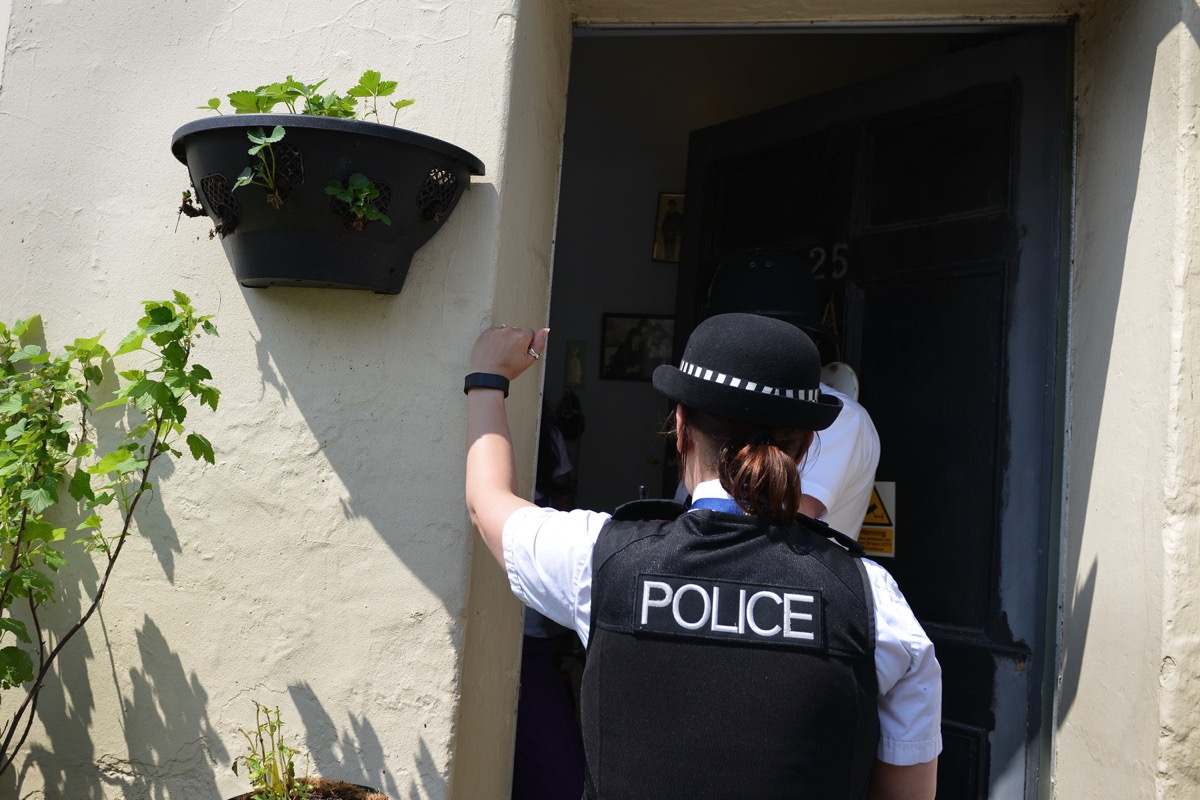
Regardless of what you might see on Tv, police force officers can't actually outburst into your domicile unless they either A. accept a warrant or B. have received your express consent to do so. However, as Scharff Law Firm in Raleigh, N Carolina, points out, there are a few exceptions to this rule. For instance, an officer can enter your dwelling house without your consent nether the manifestly view doctrine when they "tin can run into prove within their sightline."

Not only do police officers not accept the right to enter your dwelling without a warrant, but they besides can't search your property without one or your consent. But this right is rather recent; it was only in 2022 that the Supreme Court ruled in Collins v. Virginia that "when a law enforcement officer physically intrudes on [a person'southward property] to gather evidence, a search inside the pregnant of the Fourth Amendment has occurred."

If a policer officeholder tells yous that they found your DNA at the scene of the crime, they may not necessarily exist telling the truth—and that's perfectly within their rights. Time and time again this issue has come up up in court cases—and every time it does, the judges ultimately side with the cops, noting that deliberate deception is fair game so long equally it's not likely to produce a false confession.

If yous don't want the law to take your DNA on file, then don't accept a cup of coffee or h2o from them. According toNicholas J. Moore, Esq., a San Diego trial attorney, it is well within the police officer's rights to obtain Dna samples from anything yous touch—and "a positive Dna match to an active criminal offense scene is usually sufficient for an abort and a charge."
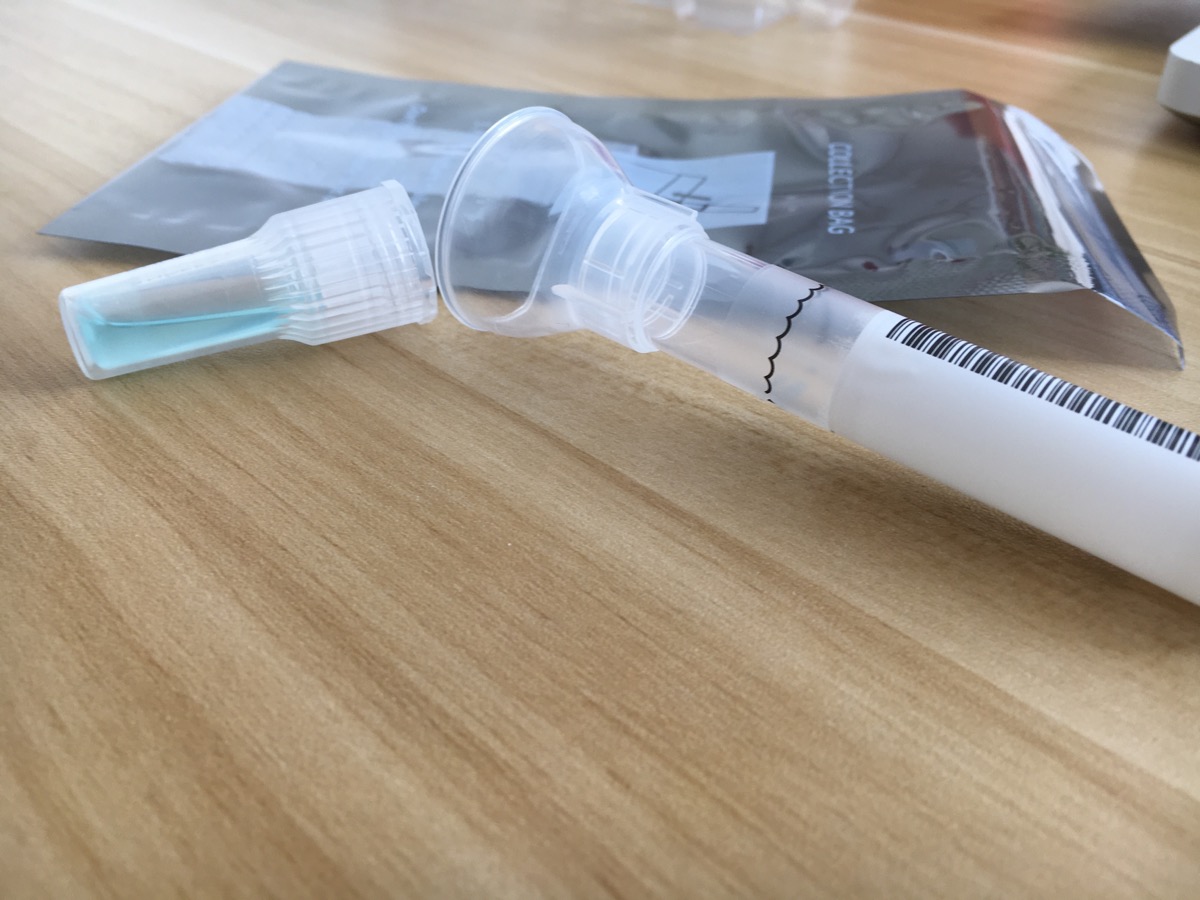
Think twice before sending your Dna in to get tested past a company similar 23andMe or Ancestry. Though it'due south extremely uncommon, DNA-testing companies like these make information technology clear on their websites that they will comply with regime and law enforcement requests for user data and Deoxyribonucleic acid samples. In 2018, a sample from an ancestry website even helped Sacramento government grab the infamous Golden State Killer.

The American Civil Liberties Matrimony (ACLU) of Connecticut notes that as long every bit you are in an outdoor public space or on private property with the owner'south permission, a police officer cannot control you non to photograph or film them.

Law officers also can't ask yous to delete any footage or film you lot go. The only instance in which an officeholder can demand to see your photographs or videos is with a warrant—and even and then, they don't accept the right to delete things from your phone.

Of course, when y'all're traveling internationally, you are legally obligated to show government your identification. Yet, when it comes to identifying yourself within usa, whether you are legally required to show an officer your ID is determined past each state.
In Alabama, for case, the law states that a sheriff or whatever other officer of the constabulary can "stop any person abroad in a public place whom he reasonably suspects is committing, has committed, or is well-nigh to commit a felony or other public offense and may demand of him his proper noun, accost, and an explanation of his deportment." But over in Maryland, an officer tin can only enquire for identification if they believe that a person "may exist wearing, carrying, or transporting a handgun."
Regardless of which state you're in, keep in mind that y'all are never obligated to identify yourself to an officer if they have no reason to suspect you of committing a law-breaking.
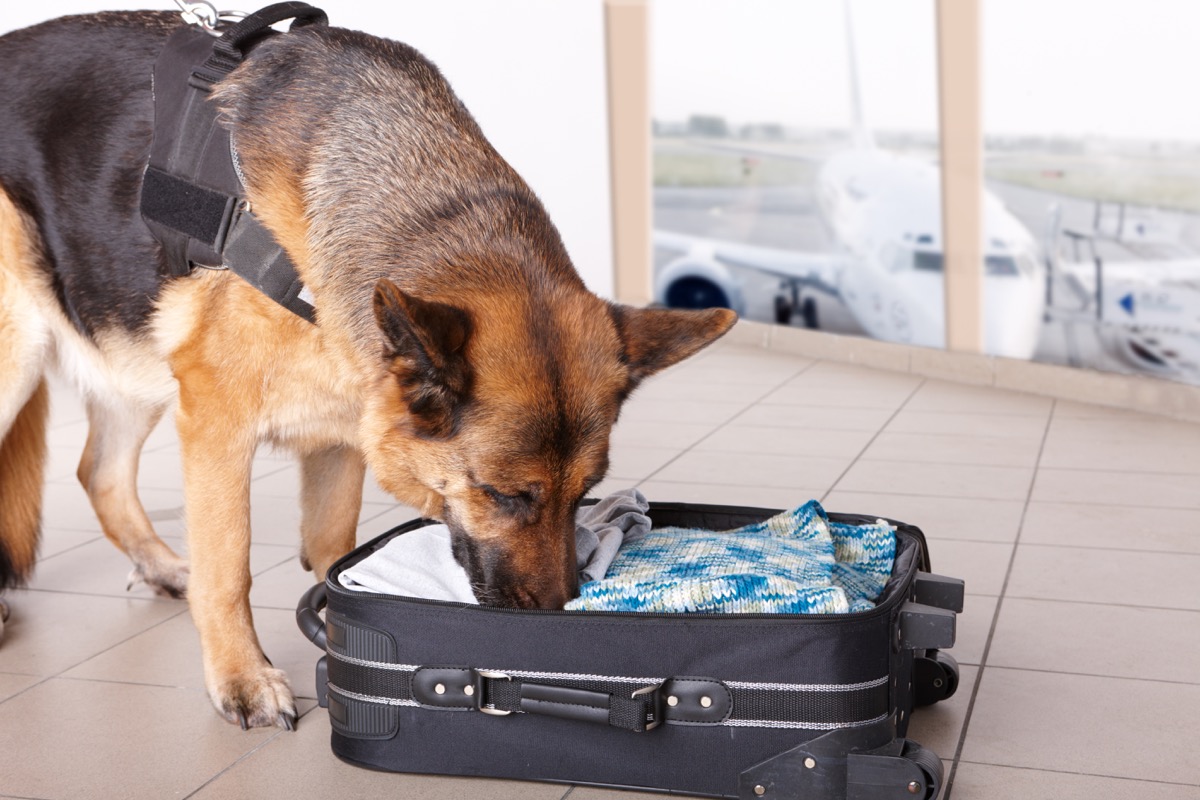
If you leave your suitcase unattended in the airport to run to the bathroom, the police accept every right to search it. This was determined in the landmark 1997 United states v. Tugwell Supreme Court case, which adamant that whenever a person leaves property unattended—intentionally or otherwise—they forfeit whatsoever privacy protections provided by the Fourth Subpoena.
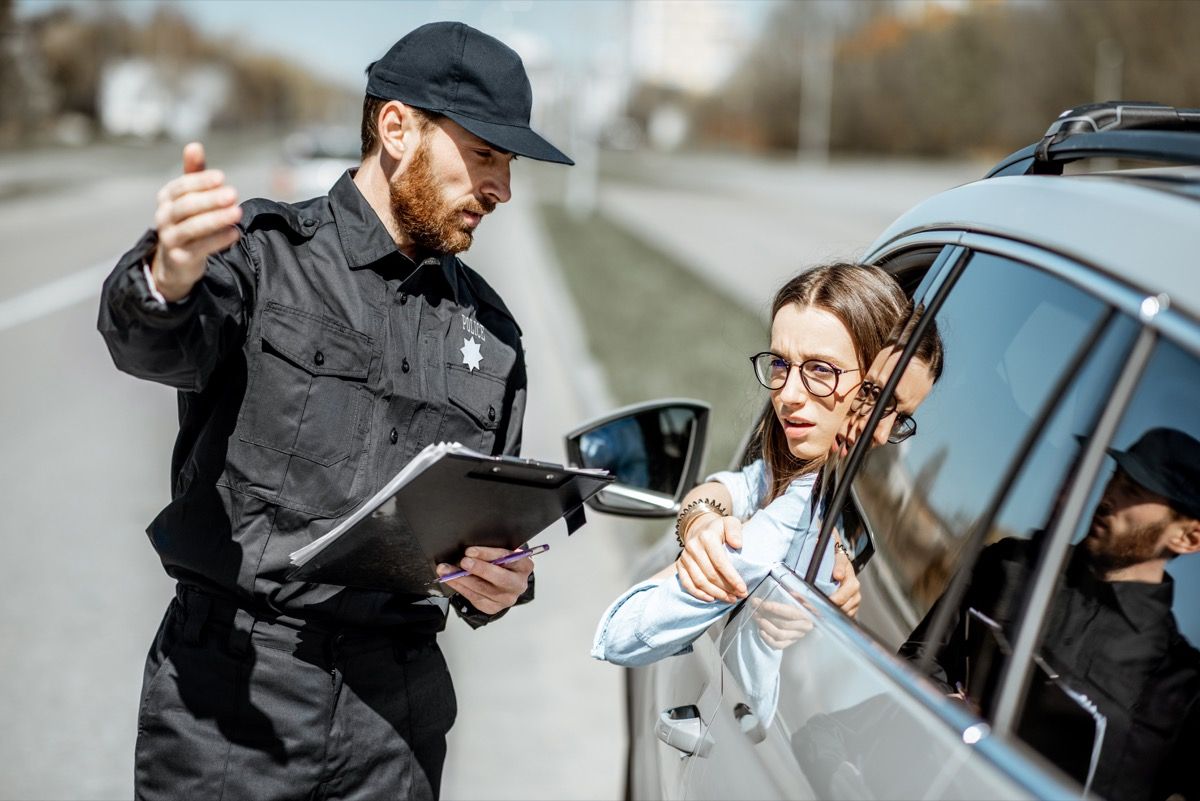
Call up that anything y'all say to an officer can andvolition be held against you lot in a court of law.

If you aren't beingness detained and you haven't been arrested, then the police cannot hold you lot confronting your will. This is thank you to the 5th Amendment of the U.S. Constitution, which, as Florida public defenderHoward Finkelstein notes, "protects you confronting self-incrimination."

The Miranda rights—that is to say, the rights that police officers are obligated to read when they arrest someone—only apply to custodial interrogations, or interrogations that happen while someone is in police custody. When information technology comes to non-custodial interrogations that people give of their ain free will, the law are not legally required to read the Miranda rights—and as such, annihilation a person says during an optional questioning can be used against them in court.

Nearly of the things you lot say earlier beingness read your Miranda rights are considered inadmissible in courtroom. However, Michigan criminal lawyer and defense attorney Patrick Barone notes on MirandaWarning.org that there are some exceptions to this dominion. For instance, "if a statement is made that admits to [a] criminal offense [and it] was not made in response to a question," then the police can apply that access against you in court.
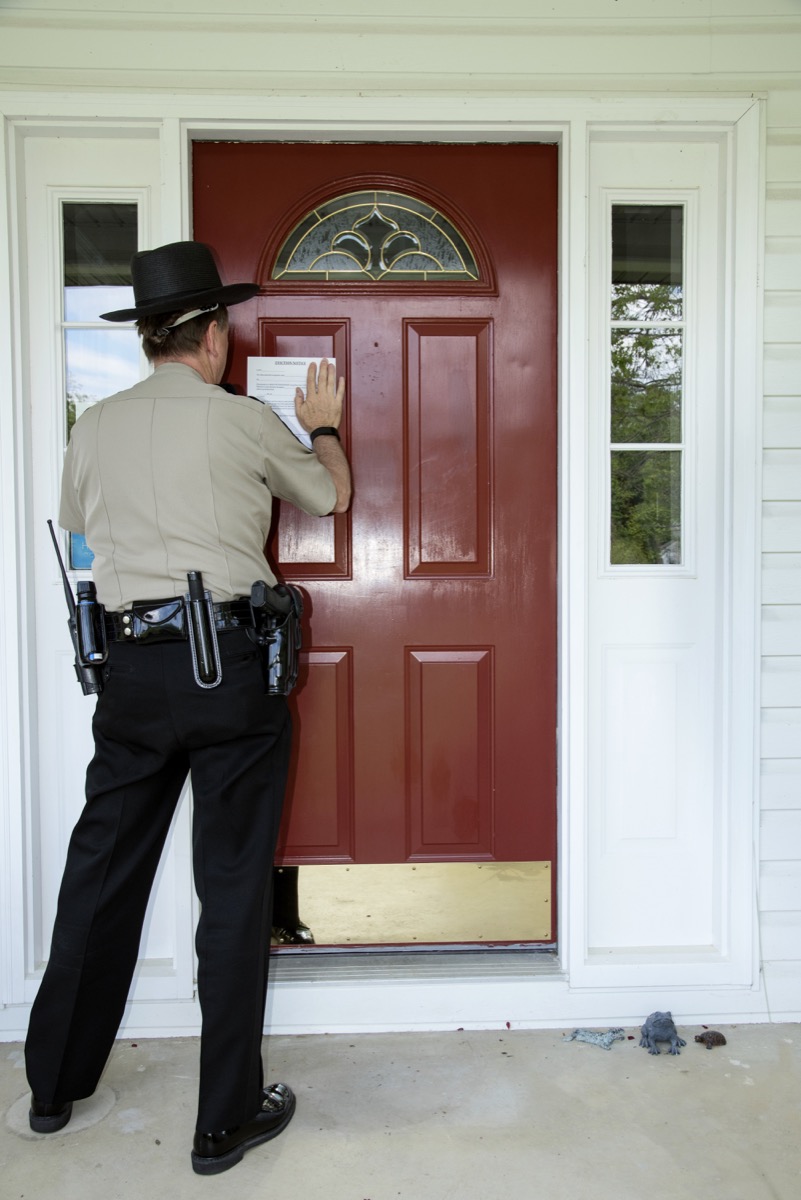
If the cops ever show up at your house and merits to take a search warrant, you can exercise your right to actually read said warrant. "Yous're welcome to read [the warrant] at your leisure," Christopher Militarist, a retired member of the police force, noted on Quora. "If the warrant turns out to be lacking, you take remedies available through the court system. Prove can exist thrown out, civil suits can be brought against the section, etc." Simply conduct in listen that the police force don't accept to await for you lot to read the warrant before entering your abode.
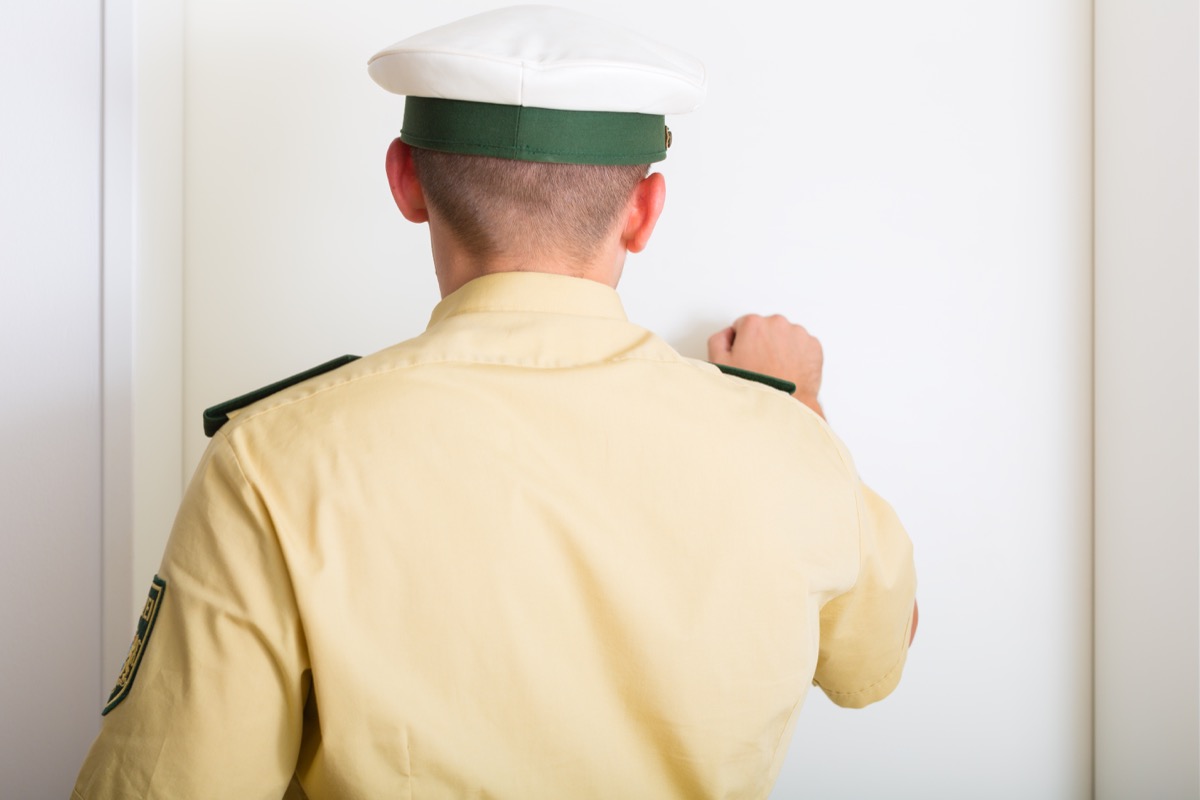
Hither's another thing that you lot should know when it comes to search warrants: Even when the police take one, they are legally required to knock and announce themselves earlier they enter. However, there is one exception to this rule: In Richards v. Wisconsin, the Supreme Court decided that the police can forego the formalities of knocking if making themselves known "would be dangerous or futile, or that it would inhibit the constructive investigation of the crime."
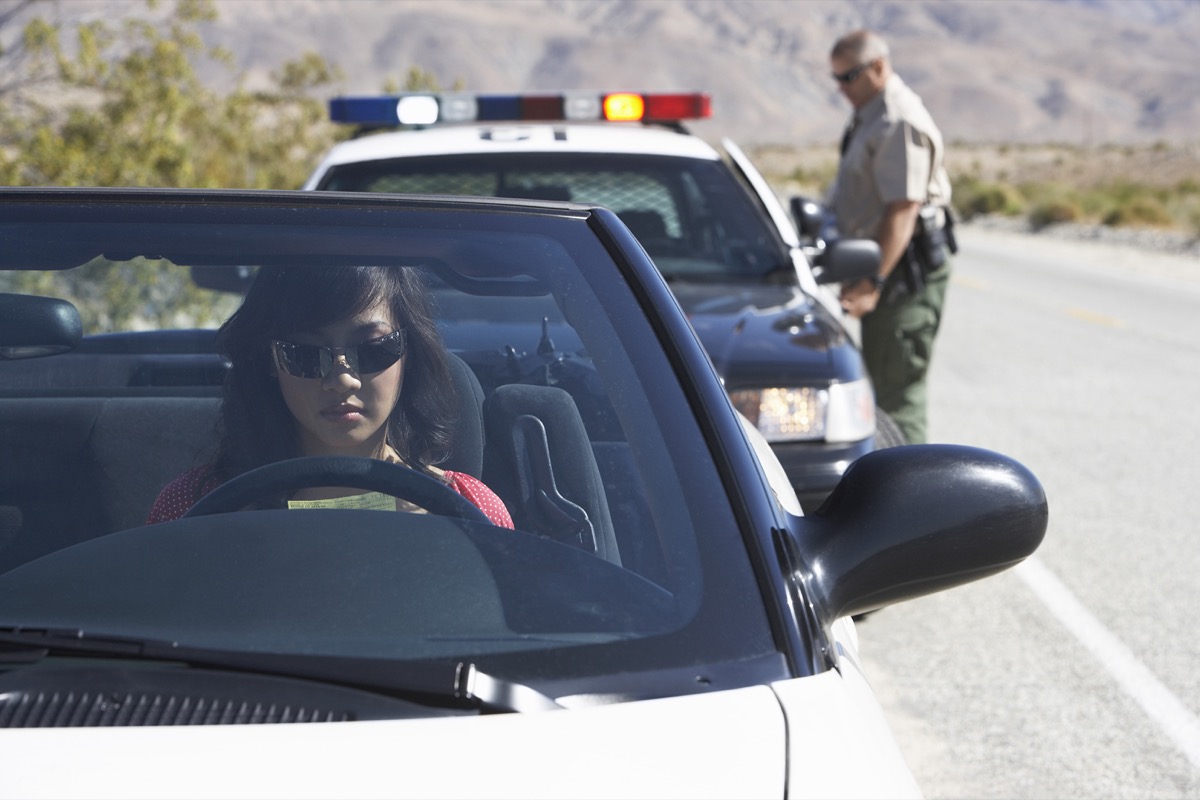
The police don't have the correct to pull you over without likely cause, notes Dallas criminal chaserMick Mickelson. What'due south more than, if theydopull you lot over without a reason to exercise so and subsequently find bear witness of a crime in your car, "they usually can't employ that evidence in courtroom against you."
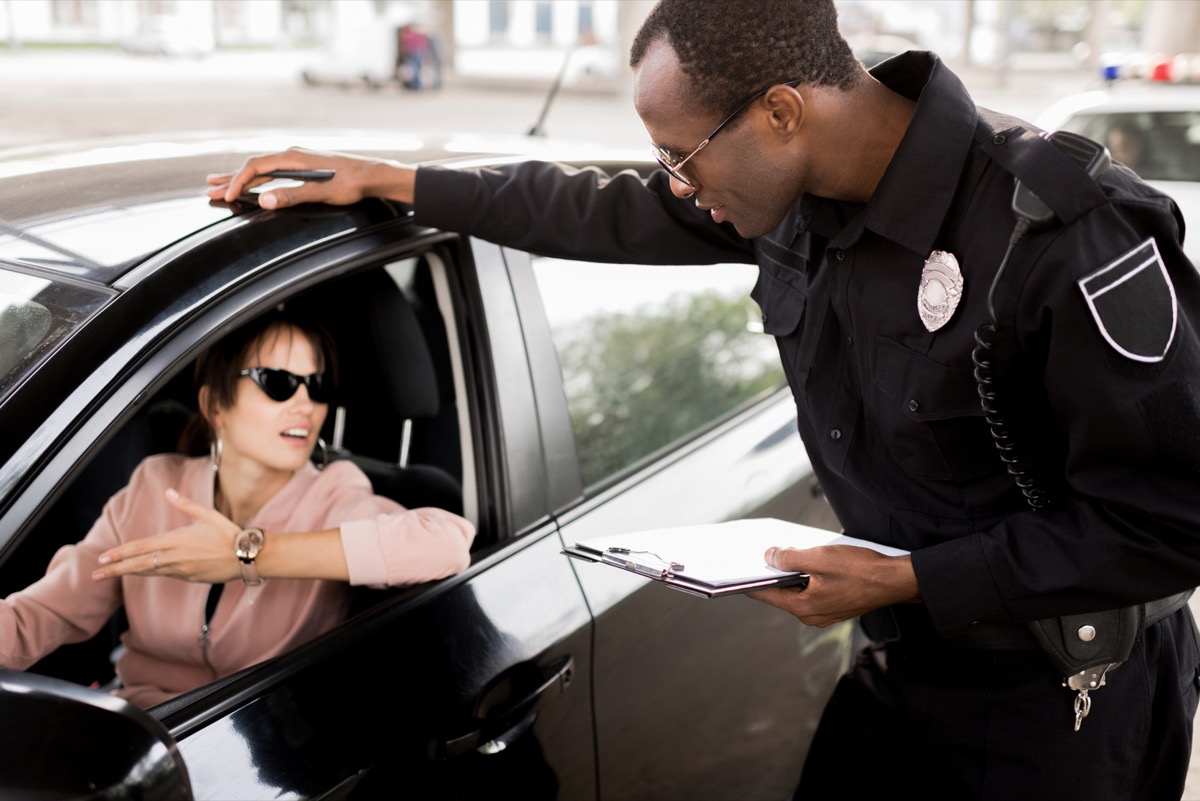
Believe it or not, a police officeholder doesn't need to utilize a speed gun in gild to decide whether or not you're driving above the speed limit. Rather, New York attorneyMichael Kramernotes that "it has been held that the stance prove of a police officer, uncorroborated by any other mechanical device, volition exist sufficient to sustain a speeding conviction." Yes, you read that right: And so long as the courtroom finds that an officeholder is qualified to gauge speed visually, so their testimony against you is enough to make a speeding ticket valid.
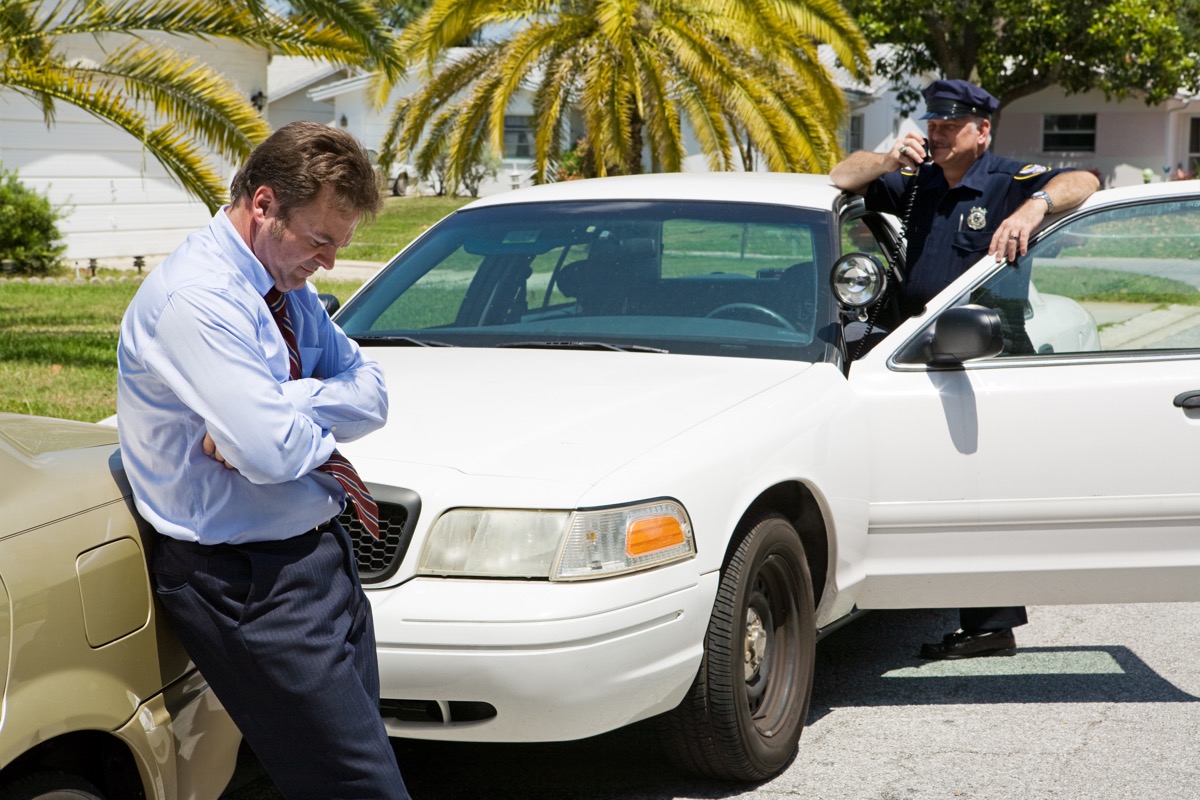
Just considering police officers are tasked with keeping the streets safe and making certain that citizens are abiding by basic laws doesn't mean that they know every single thing near the criminal justice system. Rather, Rick Bruno, a retired police commander, noted on Quora that "there are a lot of laws out there, and we [police force officers] know the bones ones for the most part—the ones we deal with all the fourth dimension—simply sometimes someone does something that looks illegal and we're not quite sure."

The aforementioned way you lot don't get along with all of your coworkers, cops also deal with comrades who aren't necessarily their favorite people. "We practice not e'er trust the people we are working with, the ones wearing the aforementioned compatible we are wearing," said Bruno. "Some are cowards, some are lazy, some are liars. Many times we try to get rid of them. Sometimes we tin can, [and] sometimes we cannot." And for ways to make your task more enjoyable, bank check out these 20 Daily Confidence Boosters for Getting Ahead at Work.
To observe more amazing secrets about living your best life, click hither to follow us on Instagram!
Source: https://bestlifeonline.com/police-officer-secrets/
0 Response to "Can a Police Officer Ask to See Your Gun"
Enviar um comentário